How is the progress of Mini LED getting on board?
2022-11-02
Source: MicroLEDDisplay
In recent years, the popularity of new energy vehicles has also burned into the field of vehicle display. The car display field, which has attracted much attention, is entering the era of technological diversification: although traditional LCD with cost advantages and high technological maturity is still the mainstream of car panels, OLED and Mini LED with higher performance are stepping up to "get on the car". ”, respectively from the latest data from DSCC and Vientiane Think Tank: OLED market revenue will increase by 2% year-on-year in 2022, reaching a scale of 42 billion U.S. dollars. From less than 100,000 in 2021, it is expected to grow to 4.5 million in 2025, with a compound annual growth rate of 159% . And how are the two major technologies currently progressing in the vehicle display market?
OLED : The distinction between soft and hard screens, try to ensure that the screen is synchronized with the life cycle of the car
2020 is called "the first year of mass production of automotive OLED screens". OLED screens are mainly used in the rearview mirror, central control, instrument panel, infotainment screen, roof display, etc. on luxury cars, such as: The 2020 Audi e-tron Sportback uses an OLED screen as a virtual rearview mirror; the 2021 Cadillac Escalade’s driving information screen, instrumentation, and infotainment screen all use curved OLED technology; the 2021 Mercedes-Benz S-Class’ central control screen uses OLED screen; the co-driver display and roof display of the ideal L9 launched last month are equipped with OLED screens...
The OLED screen used in vehicle display is divided into soft and hard screen. According to reports, the main difference between the two is the material: the soft screen polarizer and TFT substrate are all flexible materials; while the hard screen uses glass polarizer and TFT substrate . Data from Omdia shows that OLED hard screen shipments will increase from 120,000 in 2022 to 4.3 million in 2029. In 2027, OLED hard screen panel shipments will exceed flexible OLED panels, mainly single-layer OLED hard panels. The cost structure of screen panels is more optimized than that of dual-layer (series RGB) flexible OLED panels.
Although the application of OLED in vehicle display is moving forward steadily, it is limited by factors such as production cost, yield, service life, etc., and needs to be continuously optimized and improved in practical applications. For example, some people in the industry pointed out that the general vehicle display panel requires a working life of more than 50,000 hours at room temperature, while the working life of the currently commonly used OLED screen is usually only 30,000 hours. In response to this problem, according to reports, mainstream panel manufacturers are solving the problem of "burn-in" caused by the aging of organic materials by switching pixel positions in small increments and controlling brightness in different areas, and try to ensure that the display screen is synchronized with the life cycle of the car. .
Mini LED : Backlight is the mainstream, 2023 will be the real starting point
Most of the Mini LED application models are new energy vehicles, and the usage scenarios are similar to OLED, including central control, instrumentation, and passenger screens. Take the three recently released electric models as examples: the central control of Cadillac LYRIQ adopts Mini LED screen; Ideal L9 is equipped with a Mini LED safety driving interactive screen designed with HUD on the steering wheel; Feifan R7 is equipped with a 10.25-inch Mini LED instrument screen and a 12.3-inch Mini LED co-pilot screen.
Mini LED is divided into direct display and backlight. Direct display is mainly suitable for the display market above 110 inches, while Mini LED backlight is mostly used in products below 110 inches, so the application in vehicle display is mainly backlight. According to the analysis of industry insiders, vehicles driving in the sun have high performance requirements for the brightness, contrast, resolution, field of view, optical indicators, color gamut, and response speed of the vehicle display. Mini LED backlight can be well satisfied. It has become one of the important reasons for car companies to introduce Mini LED backlight high-end displays.
Despite being sought after, the application of Mini LED backlights in automotive displays, like OLED, faces many pain points. According to industry media research, at present, most Mini LED manufacturers are in the stage of product promotion/verification, vehicle regulatory certification, cost , yield, standardization, mass production and many other issues still need to be solved. For example, in terms of vehicle regulatory certification, the traditional one only takes 12 months, while the vehicle regulatory certification of backlight modules takes 16-24 months, which is a long cycle. Without the system's vehicle regulatory certification, some OEMs will have doubts about the Mini LED system solution. Therefore, 2022 will be the transition of the automotive market from the R&D and testing stage to the quasi-mass production stage, but 2023 will be the real vehicle Mini LED backlight display. important node in the starting volume.
Under the trend of automobile intelligence, all safety information of vehicle driving may rely more and more on on-board display, and the industry's requirements for display quality will become higher and higher. Therefore, whether it is an OLED screen or a Mini LED screen, whether it can occupy an important position in the car display in the future, the quality is one of the key factors.
In recent years, the popularity of new energy vehicles has also burned into the field of vehicle display. The car display field, which has attracted much attention, is entering the era of technological diversification: although traditional LCD with cost advantages and high technological maturity is still the mainstream of car panels, OLED and Mini LED with higher performance are stepping up to "get on the car". ”, respectively from the latest data from DSCC and Vientiane Think Tank: OLED market revenue will increase by 2% year-on-year in 2022, reaching a scale of 42 billion U.S. dollars. From less than 100,000 in 2021, it is expected to grow to 4.5 million in 2025, with a compound annual growth rate of 159% . And how are the two major technologies currently progressing in the vehicle display market?
OLED : The distinction between soft and hard screens, try to ensure that the screen is synchronized with the life cycle of the car
2020 is called "the first year of mass production of automotive OLED screens". OLED screens are mainly used in the rearview mirror, central control, instrument panel, infotainment screen, roof display, etc. on luxury cars, such as: The 2020 Audi e-tron Sportback uses an OLED screen as a virtual rearview mirror; the 2021 Cadillac Escalade’s driving information screen, instrumentation, and infotainment screen all use curved OLED technology; the 2021 Mercedes-Benz S-Class’ central control screen uses OLED screen; the co-driver display and roof display of the ideal L9 launched last month are equipped with OLED screens...
The OLED screen used in vehicle display is divided into soft and hard screen. According to reports, the main difference between the two is the material: the soft screen polarizer and TFT substrate are all flexible materials; while the hard screen uses glass polarizer and TFT substrate . Data from Omdia shows that OLED hard screen shipments will increase from 120,000 in 2022 to 4.3 million in 2029. In 2027, OLED hard screen panel shipments will exceed flexible OLED panels, mainly single-layer OLED hard panels. The cost structure of screen panels is more optimized than that of dual-layer (series RGB) flexible OLED panels.
Although the application of OLED in vehicle display is moving forward steadily, it is limited by factors such as production cost, yield, service life, etc., and needs to be continuously optimized and improved in practical applications. For example, some people in the industry pointed out that the general vehicle display panel requires a working life of more than 50,000 hours at room temperature, while the working life of the currently commonly used OLED screen is usually only 30,000 hours. In response to this problem, according to reports, mainstream panel manufacturers are solving the problem of "burn-in" caused by the aging of organic materials by switching pixel positions in small increments and controlling brightness in different areas, and try to ensure that the display screen is synchronized with the life cycle of the car. .
Mini LED : Backlight is the mainstream, 2023 will be the real starting point
Most of the Mini LED application models are new energy vehicles, and the usage scenarios are similar to OLED, including central control, instrumentation, and passenger screens. Take the three recently released electric models as examples: the central control of Cadillac LYRIQ adopts Mini LED screen; Ideal L9 is equipped with a Mini LED safety driving interactive screen designed with HUD on the steering wheel; Feifan R7 is equipped with a 10.25-inch Mini LED instrument screen and a 12.3-inch Mini LED co-pilot screen.
Mini LED is divided into direct display and backlight. Direct display is mainly suitable for the display market above 110 inches, while Mini LED backlight is mostly used in products below 110 inches, so the application in vehicle display is mainly backlight. According to the analysis of industry insiders, vehicles driving in the sun have high performance requirements for the brightness, contrast, resolution, field of view, optical indicators, color gamut, and response speed of the vehicle display. Mini LED backlight can be well satisfied. It has become one of the important reasons for car companies to introduce Mini LED backlight high-end displays.
Despite being sought after, the application of Mini LED backlights in automotive displays, like OLED, faces many pain points. According to industry media research, at present, most Mini LED manufacturers are in the stage of product promotion/verification, vehicle regulatory certification, cost , yield, standardization, mass production and many other issues still need to be solved. For example, in terms of vehicle regulatory certification, the traditional one only takes 12 months, while the vehicle regulatory certification of backlight modules takes 16-24 months, which is a long cycle. Without the system's vehicle regulatory certification, some OEMs will have doubts about the Mini LED system solution. Therefore, 2022 will be the transition of the automotive market from the R&D and testing stage to the quasi-mass production stage, but 2023 will be the real vehicle Mini LED backlight display. important node in the starting volume.
Under the trend of automobile intelligence, all safety information of vehicle driving may rely more and more on on-board display, and the industry's requirements for display quality will become higher and higher. Therefore, whether it is an OLED screen or a Mini LED screen, whether it can occupy an important position in the car display in the future, the quality is one of the key factors.
Dynamic inventory of global Micro LED manufacturers in H1 this year
DIP, SMD two kinds of common outdoor LED display package.
Related Article
Chinese LED display companies including Leyard, Unilumin, Absen, and Hisense are shining at the 2026 World Cup – from over 2,200 sqm display systems to the first 360° center-hung funnel screen, redefining the visual experience of top-tier sporting events.
Chinese LED Display Shines at 2026 World Cup – Multi-Scenario Solutions Redefine Premium Sports Experience
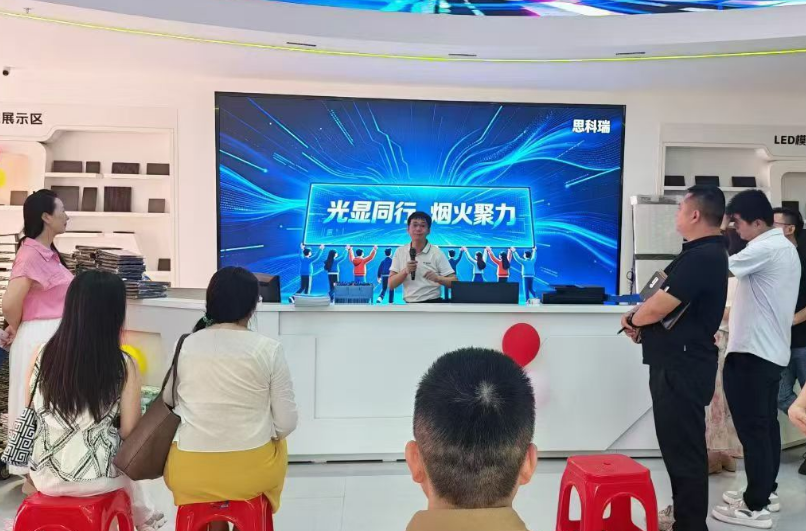
welcomes international clients from 10+ countries to its Shenzhen and Dongguan factories for production line tours and quality control demonstrations, strengthening global partnership confidence.
International Clients Visit 思科瑞光电's Shenzhen & Dongguan Factories – Strengthening Global Partnerships