Dynamic inventory of global Micro LED manufacturers in H1 this year
2022-11-18
Entering 2022, Mini LED technology will accelerate into the fast lane of development, and terminal products will emerge in an endless stream. According to incomplete statistics from LEDinside, in the first half of the year alone, the terminal has released more than 40 new Mini LED products. It is also more close to the people, promoting the accelerated penetration of Mini LED technology into the consumer electronics field, and the market presents a lively scene.
As the ultimate display technology, Micro LED, the development momentum should not be underestimated, especially in the application of large-scale displays. Many manufacturers have begun to advance the layout of the C-end market, bringing Micro LED home display products, and the price has begun to drop. Its development speed Faster than expected.
Display giant Samsung brought a 110-inch Micro LED TV from the National Bank, priced at about 1.05 million yuan. On the day of the reservation, the first batch of reservations were all sold out. Ledman has entered the Micro LED home market since last year and released Ledman giant screen products. Currently, there are four sizes from 108 to 163 inches. Among them, the same 110-inch products are priced at only about 300,000 yuan. Leyard released the latest Micro LED display product LEYARD DIAMOND in June, breaking the minimum price of 100-inch TV products above the 500,000 yuan mark for the first time.
In the field of micro-display, more consumer terminal brands have begun to introduce Micro LED as the display technology for the latest AR glasses products, and AR devices based on Micro LED technology are rapidly entering the public eye.
New products of Micro LED
Thanks to the efforts of the entire LED industry chain, the performance of Micro LED has continued to improve and the cost has continued to decline. Therefore, new Micro LED products have continued to increase. According to incomplete statistics from LEDinside, there are about 6 new Micro LED terminal products in the first half of the year.
With the characteristics of low power consumption, high brightness, high contrast, long life and fast response, Micro LED has rich application scenarios. It can be observed from the statistical table that the application scope of Micro LED technology is gradually expanding. In addition to the common commercial large screens such as LED splicing screens and conference all-in-one machines, Micro LED is also gradually infiltrating into consumer-grade TVs, AR smart glasses and other fields.
In terms of TVs, Samsung, Leyard, and Lehman, which have been mentioned before, are planning ahead in the Micro LED consumer TV market, and further driving down product prices. Among them, it was revealed that Samsung has started the production of 89-, 101-, and 114-inch Micro LED TVs after launching the National Bank 110-inch Micro LED TV in the first half of the year, and the 89-inch product is expected to be released by the end of the year.
In terms of AR smart glasses, OPPO's Micro LED AR-assisted reality smart glasses were officially launched in limited quantities on March 3, priced at 4,999 yuan. On the basis of last year's first Micro LED AR smart glasses ESSNZ One, tooz released AR prescription glasses ESSNZ Berlin using single green light Micro LED technology in the first half of this year.
The Mojo Lens, the world's first Micro LED smart contact lens developed by Mojo Vision, has successfully completed the eye test in July this year and obtained good feedback.
Micro LED technology, once thought to be out of reach, is gradually moving from commercial applications to broader consumer applications. There is no doubt that this is the result of the concerted efforts of the entire LED industry chain in the past few years. Although there are still many difficulties in the development of Micro LED, LED companies have not backed down. Instead, they have increased their efforts in the deployment of Micro LED technology, and sounded the horn to launch a comprehensive attack on Micro LED technology in the first half of 2022.
In the first half of the year, the Micro LED industry supply chain was enthusiastic, with innovative products, frequent acquisitions, cooperation, project financing, and fundraising, and news of technological breakthroughs. It can be seen that Micro LED industry chain manufacturers are trying to drive Micro LEDs through various channels LED industry development.
In terms of products, Jingzhan Semiconductor and Sofi-Epi have developed full-color and red InGaN epitaxial wafers; Chipon-based and Xinying Optoelectronics have developed thin-film flip chips and Micro LED chip product series for various pixel pitches; Toray Group, Merck Group has launched Micro LED related materials, which can improve Micro LED display performance and mass transfer yield.
For the application of smart wearable devices, upstream companies such as MICLEDI, Junwan Micro, Porotech, Huayingxin, and Cellid have released the latest Micro LED arrays, microdisplays, and microdisplay modules for smart devices, helping AR/VR devices to accelerate their development. Metaverse key interaction interface.
In terms of in-vehicle display, at the Touch Taiwan exhibition in May, Chitron and AUO displayed a series of Micro/Mini LED in-vehicle displays, including the latest Micro LED in-vehicle displays such as Micro LED transparent displays and reelable Micro LED displays. product.
It is worth noting that in April, Chichuang's IPO application on the Taiwan Innovation Board was approved, and it is expected to become the first company listed on the "Taiwan Innovation Board" and the first pure Micro LED concept stock in Taiwan. It is expected to be released in the third quarter of this year. Complete listing. After the listing, the production and R&D of Chichuang Micro LED business will receive more capital support.
In terms of product layout, Chitron expects to start mass production of chip substrates for Micro LED large-scale displays this year, as well as chip substrates for trial production of commercial displays. Displays for automotive applications, wearable applications, and AR/VR are expected to start sending samples this year.
Cooperation/Acquisition Project Dynamics
When it comes to the development of Micro LED technology, companies from all walks of life have invariably increased their awareness of cooperation. Manufacturers in the Micro LED industry chain understand that in order to accelerate breakthroughs in Micro LED technology, upstream and downstream cooperation is essential. In the first half of this year, a number of companies have reached strategic cooperation for the application of Micro LED technology in the field of micro display.
Among them, Micro LED microdisplay manufacturer JBD is the most active. In January and June, it reached cooperation with data glasses optics company tooz and see-through waveguide supplier Dispelix to develop full-color Micro LED smart glasses and Micro LED smart glasses applications.
In July, JBD and AR glasses system integration solution solution Shang Shunwei Technology reached a cooperation to jointly develop a binocular full-color AR glasses based on Micro LED technology, providing more reference design ideas and Manufacturing Solutions.
In the same month, JBD also cooperated with 3D printing innovation company Zongwei Cube to jointly develop the world's first consumer-grade Micro LED 3D printer. It can be used in aerospace, medicine and other scientific and technological fields that require high printing accuracy.
In terms of acquisition dynamics, downstream companies such as Snap, Vuzix, and Google have made acquisitions of upstream related technology companies in order to develop the AR/VR smart wearable device business and reserve Micro LED technology.
Among them, Applied Materials Corporation of the United States acquired Picosun, a Finnish semiconductor equipment company, and expanded the company's product portfolio in ICAPS (Internet of Things, communications, automotive, power and sensors) through Picosun's atomic layer deposition (ALD) technology. It is reported that Picosun's atomic layer deposition technology can effectively improve the performance of different types of LED chips such as Micro LED.
Production/R&D project dynamics
In the first half of 2022, a number of Micro LED-related production and R&D projects have made the latest progress. In mainland China, Huacan Optoelectronics, Vogel Optoelectronics, and Shentianma set up new Micro LED projects; Qianzhao Optoelectronics project completed fundraising; Ledman Optoelectronics and Jucan Optoelectronics issued fundraising plans; Sanan Optoelectronics and Shenkeda projects raised funds The fund-raising review was approved; the fundraising of Aurora Borealis, Jingce Electronics and Jingzhida projects was accepted.
Overseas, ams OSRAM announced in April that it will build a new 8-inch LED front-end factory in Malaysia to increase production capacity to meet the expected growth in advanced LED technology and Micro LED. Investments in the new plant are expected to amount to around 800 million euros over the next 18-24 months.
In Taiwan, Fucai completed private placement pricing in June, and is expected to raise more than NT$3.6 billion (about RMB 820 million), which will be invested in the construction of a 6-inch wafer fab dedicated to Micro LED and equipment procurement.
In addition, a total of 5 Micro LED related projects have made the latest progress in the construction progress. Among them, the Micro LED technology research and development project of Xinying Display Technology, a joint venture between Sanan Semiconductor and TCL Huaxing, started in January; Nationstar Optoelectronics and JBD completed the capping of the main body of the expansion project in January and June respectively; Ruifeng Optoelectronics project in May Completion; High-tech Huaye project was officially put into production in March.
New trends in Micro LED technology
The progress of Micro LED technology has always been a direct factor affecting the large-scale application of Micro LED. Key technical problems such as mass transfer, red light efficiency, and full-color micro display have always been concerned and continuously studied by the LED industry chain.
In the first half of the year, many manufacturers made new breakthroughs in Micro LED technology. In terms of mass transfer technology, Konka Group and Leyard have both increased the transfer yield to over 99.9%. In terms of red light efficiency, JBD has achieved mass production of 500,000 nits of ultra-high brightness red light Micro LED microdisplays.
On the issue of full-color technology, Zhaoyuan Optoelectronics combines integrated single-color Micro LED chips with high-efficiency multi-color quantum dots to enable Micro LED modules to achieve full-color display capabilities; Porotech has developed DynamicPixelTuning™ (Dynamic Pixel Tuning Technology), Single-pixel full-color or color-tunable Micro LED displays can be realized on a single wafer.
In addition, related Micro LED manufacturers have also released new achievements in technical aspects such as packaging, welding, repairing, and testing.
Development progress of Micro LED production equipment
The breakthrough of Micro LED technology is closely related to the upgrading and optimization of upstream equipment, such as mass transfer and inspection and repair related equipment. With the gradual release of Micro LED production capacity and the gradual increase of downstream products, in the first half of the year, there have also been breakthroughs in production equipment to varying degrees.
Among them: Han's Laser Mass Transfer Equipment and Whitt's Micro LED related equipment are being verified at customers; Teyi Technology's Micro LED testing equipment and Aixtron MOCVD equipment have received new orders; Onetime Technology has launched the first domestic Micro LED set Wafer-level mass inspection system.
Financing project dynamics
While the supply chain has increased its firepower, the attention of the capital market to the Micro LED industry has only increased. In the first half of the year, many companies completed a new round of financing. Among them, equipment manufacturers NaNO X, InZix, Teyi Technology, Micro LED micro display technology companies Poro, tech, VueReal, Aledia, domestic Micro LED display technology companies Si Tan Technology, Huayingxin, Yuanxu Semiconductor all completed the first half of the year. A new round of financing is used for the development of the Micro LED business.
Summarize
TrendForce pointed out that the Micro LED industry may take a long time to achieve mass production. However, Micro LED is still the most important development direction of the LED industry in the future, among which the market potential of large-scale displays, wearable devices and head-mounted devices is unlimited.
TrendForce predicts that Micro LED large-scale displays will enter the home theater level and high-end commercial display market. It is estimated that the output value of Micro LED large-scale display chips will reach US$54 million in 2022 and grow to US$4.5 billion in 2026, CAGR The growth rate was 204%. As time progresses and technical obstacles are overcome one by one, it is expected that the development of Micro LED large-scale displays will enter a peak period from 2026 to 2030, and the output value of Micro LED chips in a single year is expected to reach tens of billions of dollars.
On the other hand, as technologies such as red light chips, laser transfer, wafer bonding, and full-colorization gradually mature, TrendForce estimates that the output value of Micro LED chips used in AR glasses will increase from 2023 to 2026. Ushering in a compound growth rate of more than 700% per year, it is estimated that the output value will be US$41 million by 2026.
Although it will take time for Micro LED to achieve large-scale mass production, the development prospects are optimistic. From the perspective of the first half of the year, in the context of the poor economic environment at home and abroad, the Micro LED field is more active than before, from cooperation, acquisition to Financing, building factories, from new technology breakthroughs to expanding applications, Micro LED industry chain manufacturers are accelerating the development of Micro LED in all directions.
In addition, the support of the national government is also the main reason for promoting the development of Micro LED. In the first half of the year, various development plans and action plan documents issued across mainland China included new display technologies such as Micro LED as key projects to stimulate the development of the local digital economy industry, metaverse industry, and new display industry. .
Other countries and regions have also begun to accelerate the development of the local Micro LED industry. For example, the Gyeonggi-do government of South Korea announced in May that it plans to invest 14.3 billion won to build a Micro LED industry base for local display, LED and semiconductor companies to enter the Micro LED display industry.
In general, in the first half of the year, the entire Micro LED industry chain has been vigorously promoting the development of the industry. With the support and promotion of more relevant policies, it is believed that the investment and market scale of the Micro LED industry will continue to expand, and the mass production of Micro LED will continue. It will also be accelerated on the agenda.
As the ultimate display technology, Micro LED, the development momentum should not be underestimated, especially in the application of large-scale displays. Many manufacturers have begun to advance the layout of the C-end market, bringing Micro LED home display products, and the price has begun to drop. Its development speed Faster than expected.
Display giant Samsung brought a 110-inch Micro LED TV from the National Bank, priced at about 1.05 million yuan. On the day of the reservation, the first batch of reservations were all sold out. Ledman has entered the Micro LED home market since last year and released Ledman giant screen products. Currently, there are four sizes from 108 to 163 inches. Among them, the same 110-inch products are priced at only about 300,000 yuan. Leyard released the latest Micro LED display product LEYARD DIAMOND in June, breaking the minimum price of 100-inch TV products above the 500,000 yuan mark for the first time.
In the field of micro-display, more consumer terminal brands have begun to introduce Micro LED as the display technology for the latest AR glasses products, and AR devices based on Micro LED technology are rapidly entering the public eye.
New products of Micro LED
Thanks to the efforts of the entire LED industry chain, the performance of Micro LED has continued to improve and the cost has continued to decline. Therefore, new Micro LED products have continued to increase. According to incomplete statistics from LEDinside, there are about 6 new Micro LED terminal products in the first half of the year.
With the characteristics of low power consumption, high brightness, high contrast, long life and fast response, Micro LED has rich application scenarios. It can be observed from the statistical table that the application scope of Micro LED technology is gradually expanding. In addition to the common commercial large screens such as LED splicing screens and conference all-in-one machines, Micro LED is also gradually infiltrating into consumer-grade TVs, AR smart glasses and other fields.
In terms of TVs, Samsung, Leyard, and Lehman, which have been mentioned before, are planning ahead in the Micro LED consumer TV market, and further driving down product prices. Among them, it was revealed that Samsung has started the production of 89-, 101-, and 114-inch Micro LED TVs after launching the National Bank 110-inch Micro LED TV in the first half of the year, and the 89-inch product is expected to be released by the end of the year.
In terms of AR smart glasses, OPPO's Micro LED AR-assisted reality smart glasses were officially launched in limited quantities on March 3, priced at 4,999 yuan. On the basis of last year's first Micro LED AR smart glasses ESSNZ One, tooz released AR prescription glasses ESSNZ Berlin using single green light Micro LED technology in the first half of this year.
The Mojo Lens, the world's first Micro LED smart contact lens developed by Mojo Vision, has successfully completed the eye test in July this year and obtained good feedback.
Micro LED technology, once thought to be out of reach, is gradually moving from commercial applications to broader consumer applications. There is no doubt that this is the result of the concerted efforts of the entire LED industry chain in the past few years. Although there are still many difficulties in the development of Micro LED, LED companies have not backed down. Instead, they have increased their efforts in the deployment of Micro LED technology, and sounded the horn to launch a comprehensive attack on Micro LED technology in the first half of 2022.
In the first half of the year, the Micro LED industry supply chain was enthusiastic, with innovative products, frequent acquisitions, cooperation, project financing, and fundraising, and news of technological breakthroughs. It can be seen that Micro LED industry chain manufacturers are trying to drive Micro LEDs through various channels LED industry development.
In terms of products, Jingzhan Semiconductor and Sofi-Epi have developed full-color and red InGaN epitaxial wafers; Chipon-based and Xinying Optoelectronics have developed thin-film flip chips and Micro LED chip product series for various pixel pitches; Toray Group, Merck Group has launched Micro LED related materials, which can improve Micro LED display performance and mass transfer yield.
For the application of smart wearable devices, upstream companies such as MICLEDI, Junwan Micro, Porotech, Huayingxin, and Cellid have released the latest Micro LED arrays, microdisplays, and microdisplay modules for smart devices, helping AR/VR devices to accelerate their development. Metaverse key interaction interface.
In terms of in-vehicle display, at the Touch Taiwan exhibition in May, Chitron and AUO displayed a series of Micro/Mini LED in-vehicle displays, including the latest Micro LED in-vehicle displays such as Micro LED transparent displays and reelable Micro LED displays. product.
It is worth noting that in April, Chichuang's IPO application on the Taiwan Innovation Board was approved, and it is expected to become the first company listed on the "Taiwan Innovation Board" and the first pure Micro LED concept stock in Taiwan. It is expected to be released in the third quarter of this year. Complete listing. After the listing, the production and R&D of Chichuang Micro LED business will receive more capital support.
In terms of product layout, Chitron expects to start mass production of chip substrates for Micro LED large-scale displays this year, as well as chip substrates for trial production of commercial displays. Displays for automotive applications, wearable applications, and AR/VR are expected to start sending samples this year.
Cooperation/Acquisition Project Dynamics
When it comes to the development of Micro LED technology, companies from all walks of life have invariably increased their awareness of cooperation. Manufacturers in the Micro LED industry chain understand that in order to accelerate breakthroughs in Micro LED technology, upstream and downstream cooperation is essential. In the first half of this year, a number of companies have reached strategic cooperation for the application of Micro LED technology in the field of micro display.
Among them, Micro LED microdisplay manufacturer JBD is the most active. In January and June, it reached cooperation with data glasses optics company tooz and see-through waveguide supplier Dispelix to develop full-color Micro LED smart glasses and Micro LED smart glasses applications.
In July, JBD and AR glasses system integration solution solution Shang Shunwei Technology reached a cooperation to jointly develop a binocular full-color AR glasses based on Micro LED technology, providing more reference design ideas and Manufacturing Solutions.
In the same month, JBD also cooperated with 3D printing innovation company Zongwei Cube to jointly develop the world's first consumer-grade Micro LED 3D printer. It can be used in aerospace, medicine and other scientific and technological fields that require high printing accuracy.
In terms of acquisition dynamics, downstream companies such as Snap, Vuzix, and Google have made acquisitions of upstream related technology companies in order to develop the AR/VR smart wearable device business and reserve Micro LED technology.
Among them, Applied Materials Corporation of the United States acquired Picosun, a Finnish semiconductor equipment company, and expanded the company's product portfolio in ICAPS (Internet of Things, communications, automotive, power and sensors) through Picosun's atomic layer deposition (ALD) technology. It is reported that Picosun's atomic layer deposition technology can effectively improve the performance of different types of LED chips such as Micro LED.
Production/R&D project dynamics
In the first half of 2022, a number of Micro LED-related production and R&D projects have made the latest progress. In mainland China, Huacan Optoelectronics, Vogel Optoelectronics, and Shentianma set up new Micro LED projects; Qianzhao Optoelectronics project completed fundraising; Ledman Optoelectronics and Jucan Optoelectronics issued fundraising plans; Sanan Optoelectronics and Shenkeda projects raised funds The fund-raising review was approved; the fundraising of Aurora Borealis, Jingce Electronics and Jingzhida projects was accepted.
Overseas, ams OSRAM announced in April that it will build a new 8-inch LED front-end factory in Malaysia to increase production capacity to meet the expected growth in advanced LED technology and Micro LED. Investments in the new plant are expected to amount to around 800 million euros over the next 18-24 months.
In Taiwan, Fucai completed private placement pricing in June, and is expected to raise more than NT$3.6 billion (about RMB 820 million), which will be invested in the construction of a 6-inch wafer fab dedicated to Micro LED and equipment procurement.
In addition, a total of 5 Micro LED related projects have made the latest progress in the construction progress. Among them, the Micro LED technology research and development project of Xinying Display Technology, a joint venture between Sanan Semiconductor and TCL Huaxing, started in January; Nationstar Optoelectronics and JBD completed the capping of the main body of the expansion project in January and June respectively; Ruifeng Optoelectronics project in May Completion; High-tech Huaye project was officially put into production in March.
New trends in Micro LED technology
The progress of Micro LED technology has always been a direct factor affecting the large-scale application of Micro LED. Key technical problems such as mass transfer, red light efficiency, and full-color micro display have always been concerned and continuously studied by the LED industry chain.
In the first half of the year, many manufacturers made new breakthroughs in Micro LED technology. In terms of mass transfer technology, Konka Group and Leyard have both increased the transfer yield to over 99.9%. In terms of red light efficiency, JBD has achieved mass production of 500,000 nits of ultra-high brightness red light Micro LED microdisplays.
On the issue of full-color technology, Zhaoyuan Optoelectronics combines integrated single-color Micro LED chips with high-efficiency multi-color quantum dots to enable Micro LED modules to achieve full-color display capabilities; Porotech has developed DynamicPixelTuning™ (Dynamic Pixel Tuning Technology), Single-pixel full-color or color-tunable Micro LED displays can be realized on a single wafer.
In addition, related Micro LED manufacturers have also released new achievements in technical aspects such as packaging, welding, repairing, and testing.
Development progress of Micro LED production equipment
The breakthrough of Micro LED technology is closely related to the upgrading and optimization of upstream equipment, such as mass transfer and inspection and repair related equipment. With the gradual release of Micro LED production capacity and the gradual increase of downstream products, in the first half of the year, there have also been breakthroughs in production equipment to varying degrees.
Among them: Han's Laser Mass Transfer Equipment and Whitt's Micro LED related equipment are being verified at customers; Teyi Technology's Micro LED testing equipment and Aixtron MOCVD equipment have received new orders; Onetime Technology has launched the first domestic Micro LED set Wafer-level mass inspection system.
Financing project dynamics
While the supply chain has increased its firepower, the attention of the capital market to the Micro LED industry has only increased. In the first half of the year, many companies completed a new round of financing. Among them, equipment manufacturers NaNO X, InZix, Teyi Technology, Micro LED micro display technology companies Poro, tech, VueReal, Aledia, domestic Micro LED display technology companies Si Tan Technology, Huayingxin, Yuanxu Semiconductor all completed the first half of the year. A new round of financing is used for the development of the Micro LED business.
Summarize
TrendForce pointed out that the Micro LED industry may take a long time to achieve mass production. However, Micro LED is still the most important development direction of the LED industry in the future, among which the market potential of large-scale displays, wearable devices and head-mounted devices is unlimited.
TrendForce predicts that Micro LED large-scale displays will enter the home theater level and high-end commercial display market. It is estimated that the output value of Micro LED large-scale display chips will reach US$54 million in 2022 and grow to US$4.5 billion in 2026, CAGR The growth rate was 204%. As time progresses and technical obstacles are overcome one by one, it is expected that the development of Micro LED large-scale displays will enter a peak period from 2026 to 2030, and the output value of Micro LED chips in a single year is expected to reach tens of billions of dollars.
On the other hand, as technologies such as red light chips, laser transfer, wafer bonding, and full-colorization gradually mature, TrendForce estimates that the output value of Micro LED chips used in AR glasses will increase from 2023 to 2026. Ushering in a compound growth rate of more than 700% per year, it is estimated that the output value will be US$41 million by 2026.
Although it will take time for Micro LED to achieve large-scale mass production, the development prospects are optimistic. From the perspective of the first half of the year, in the context of the poor economic environment at home and abroad, the Micro LED field is more active than before, from cooperation, acquisition to Financing, building factories, from new technology breakthroughs to expanding applications, Micro LED industry chain manufacturers are accelerating the development of Micro LED in all directions.
In addition, the support of the national government is also the main reason for promoting the development of Micro LED. In the first half of the year, various development plans and action plan documents issued across mainland China included new display technologies such as Micro LED as key projects to stimulate the development of the local digital economy industry, metaverse industry, and new display industry. .
Other countries and regions have also begun to accelerate the development of the local Micro LED industry. For example, the Gyeonggi-do government of South Korea announced in May that it plans to invest 14.3 billion won to build a Micro LED industry base for local display, LED and semiconductor companies to enter the Micro LED display industry.
In general, in the first half of the year, the entire Micro LED industry chain has been vigorously promoting the development of the industry. With the support and promotion of more relevant policies, it is believed that the investment and market scale of the Micro LED industry will continue to expand, and the mass production of Micro LED will continue. It will also be accelerated on the agenda.
he manufacturing industry has been upgraded in an all-round way, and the LED display industry has taken advantage of the east wind
How is the progress of Mini LED getting on board?
Related Article
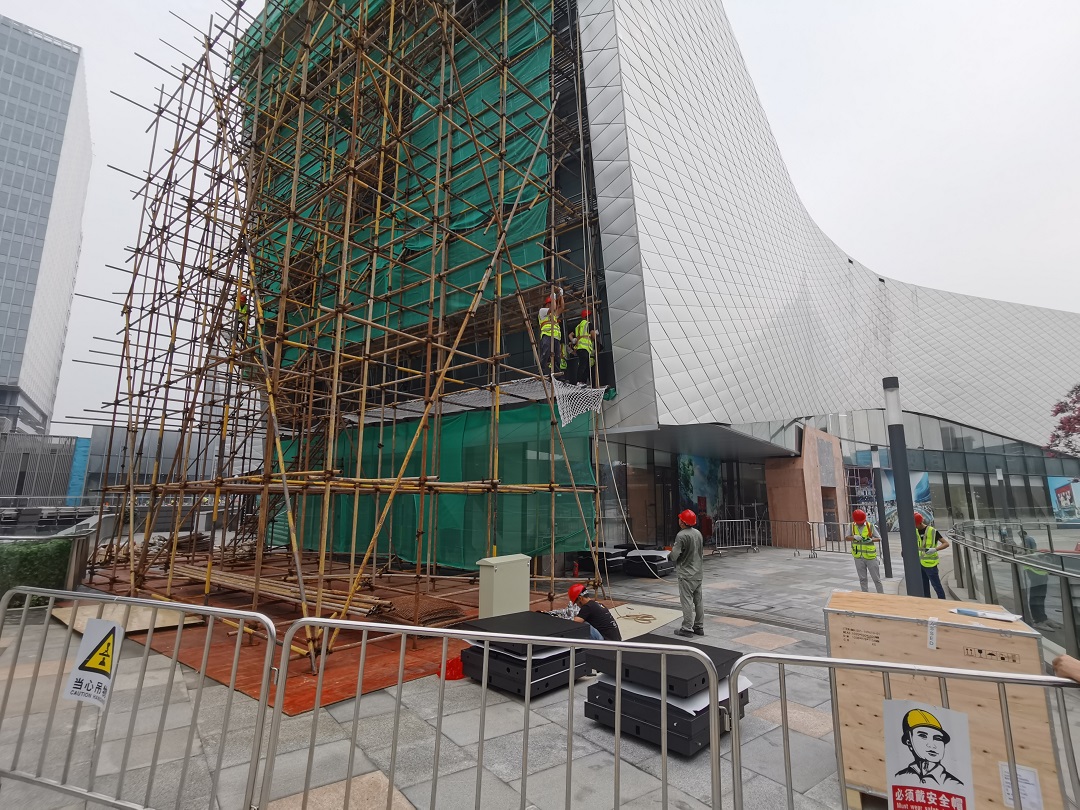
Scree Optoelectronics shares a detailed LED display installation guide, covering preparation, a 7-step process, and precautions for outdoor and indoor screens—ensuring stable operation and longer lifespan.
LED Display Installation Guide | Scree Optoelectronics Technical Sharing

Chinese LED display companies including Leyard, Unilumin, Absen, and Hisense are shining at the 2026 World Cup – from over 2,200 sqm display systems to the first 360° center-hung funnel screen, redefining the visual experience of top-tier sporting events.
Chinese LED Display Shines at 2026 World Cup – Multi-Scenario Solutions Redefine Premium Sports Experience
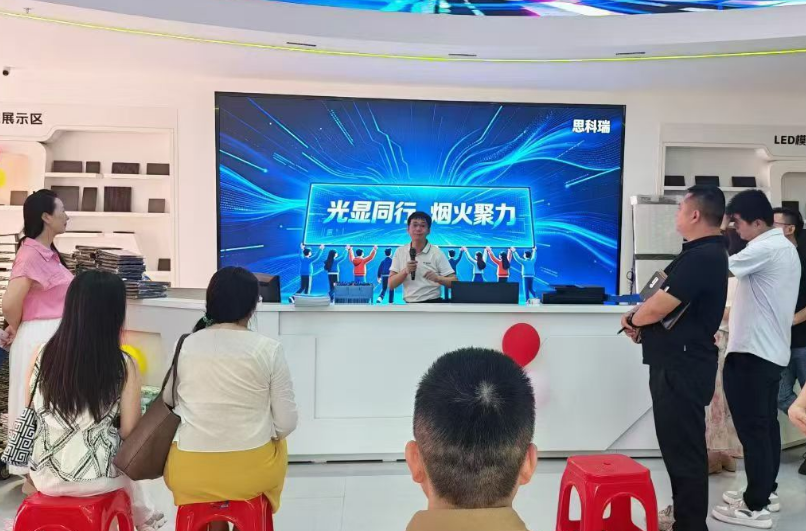
welcomes international clients from 10+ countries to its Shenzhen and Dongguan factories for production line tours and quality control demonstrations, strengthening global partnership confidence.
International Clients Visit 思科瑞光电's Shenzhen & Dongguan Factories – Strengthening Global Partnerships